
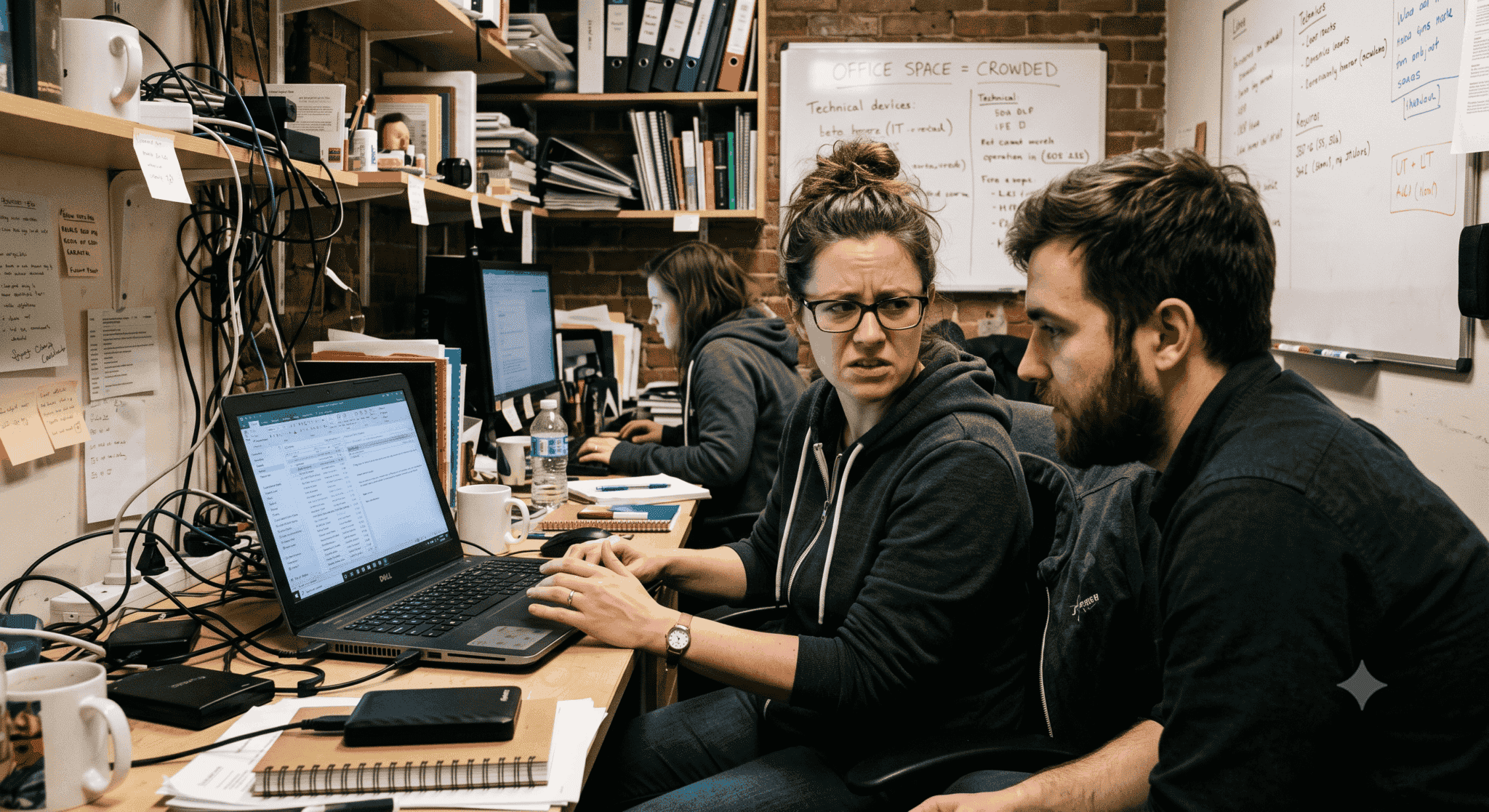
How to Build Your Small Business Team’s AI Marketing Skills In-House

Your team has AI tools. Someone is using ChatGPT for first drafts, someone else is running Canva’s AI features for social graphics, and maybe one person has tried an AI research tool for competitor scans. And the output is still uneven: some of it is genuinely useful, some of it needs a full rewrite, and nobody is quite sure which is which until after it’s published.
That gap between owning AI tools and actually being trained to use them is the specific problem this guide solves. AI marketing training for small business teams works when it is mapped to the three or four roles a small team actually has, not when it is borrowed from an enterprise learning-and-development program built for a 200-person marketing org.
AI marketing training for small business teams fails when it copies enterprise L&D formats built for big departments. It works when skills are mapped to three levels, Operate, Direct, and Architect, taught through real work instead of generic courses, and run on a 30-60-90 day plan that produces one documented workflow, not a stack of completion certificates.
What Does AI Marketing Training Actually Mean for a Small Team?
AI marketing training means teaching people to use AI tools inside a specific, repeatable marketing task, and to judge when the output is good enough to ship. It is not the same as AI tool adoption, which just means someone has a login. A small business team can have five AI subscriptions and zero trained people, because training is about judgment, not access.
This distinction matters because most SMBs already have the tools. Thryv’s 2026 AI and Small Business Adoption Survey of small and mid-sized business owners found that a large share are already spending more on AI tools than they were a year earlier, and reporting real gains in revenue and efficiency from that spend. The same survey, reported by Carrier Management in July 2026, cited a Goldman Sachs finding that nearly three-quarters of small businesses say they need additional training to actually get value from the AI they’ve adopted. Tool access moved fast. Training didn’t.
Why Most AI Marketing Training Fails Small Business Teams
Most AI training fails small teams because it is designed for the size and structure of an enterprise, not a business where one person writes the emails, runs the ads, and answers the phone. A course built for a 40-person marketing department assumes dedicated time, a training budget line, and a manager whose job is to make sure people finish it. None of that exists on a 3-person team.
The scale of the gap shows up clearly in the data. Industry-wide research compiled by Digital Applied in 2026 found that 58% of marketers cite skills gaps as their top AI challenge, yet only 17% have received training specific enough to their actual job to be useful. The same research found that companies investing in structured AI training see 43% higher project success rates on AI-related initiatives, which makes training one of the highest-return moves available to a small team, not a nice-to-have.
There’s a second failure mode specific to small businesses: training gets treated as an event instead of a habit. Someone attends a webinar, everyone nods, and three weeks later the team is back to the same ad hoc AI use it started with, because nothing about how the work actually gets done has changed. Real training changes the workflow, not just the person’s knowledge.
The Tabula AI Skills Ladder: What Your Team Actually Needs to Learn
The Tabula AI Skills Ladder maps AI marketing competence to three levels, Operate, Direct, and Architect, so a small team can see exactly who needs to learn what instead of sending everyone through the same generic course.
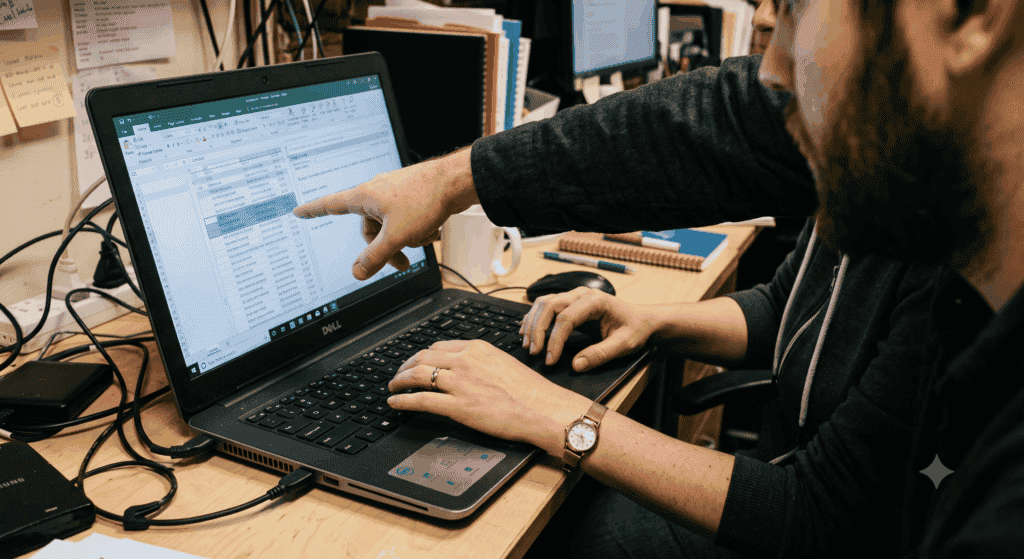
Operate is the ability to use an AI tool correctly for one defined task: writing a usable first-draft prompt, generating on-brand social variations in Canva’s AI tools, or cleaning and tagging CRM data with AI assistance. Most people on a small team need to reach Operate level on two or three specific tasks, not every AI tool available.
Direct is the ability to judge AI output critically and combine tools into a repeatable process: knowing when a ChatGPT draft needs a full rewrite versus a light edit, spotting a hallucinated statistic before it goes live, and sequencing research, drafting, and review into one workflow instead of three disconnected steps. This is usually one or two people on a small team, often whoever already owns content or campaigns.
Architect is the ability to design the system itself: deciding which tasks should involve AI at all, setting the brand and quality standards AI output has to meet, and training the next person so the system doesn’t depend on one individual staying in the role forever. On most small teams, this sits with the owner or a senior generalist, and it’s the level that determines whether a business can eventually run this system on its own rather than depending on outside help indefinitely, which is the whole premise behind Tabula’s Build, Run, Train, Own model.
How to Build an In-House AI Training Plan in 30, 60, and 90 Days
A 90-day AI training plan for a small marketing team works in three phases: audit and assign in the first 30 days, practice on real work in the next 30, and document the system in the final 30, so training produces a workflow that outlasts any one person’s memory of a webinar.
Days 1 through 30, foundation. Inventory which AI tools people are already using and for what, without judgment. Pick two or three recurring tasks to formalize, such as first-draft blog content, social caption variations, or competitor research summaries. Name one person as the Architect-in-training for this cycle. Write down the current process for each task in plain language, even if it’s messy. This document is the baseline you’ll compare against later.
Days 31 through 60, practice. Run a 30-minute working session each week using actual client or campaign work, not a generic course module. Have the Operate-level person produce a draft with AI assistance and the Direct-level person review it live, narrating what they’d change and why. Start a simple log of two things: how much time the AI-assisted version saved compared to doing it manually, and how much rework each piece needed before it was publishable.
Days 61 through 90, systemize. Turn the working session notes into a short written workflow: which AI tool, which prompt structure, which review checkpoints, and who signs off. Decide explicitly what stays in-house at this point and what still needs outside expertise, whether that’s advanced automation, technical SEO and AI search visibility work, or system design your team isn’t ready to own yet. That distinction, upskilling for what you can run yourselves versus knowing what to hand off, is what separates useful training from busywork.

What If You Don’t Have a Training Budget?
You don’t need a training budget to build real AI skills in-house. You need real work, a recurring 30-minute slot on the calendar, and one person accountable for writing down what the team learns each week.
Most AI tools already include documentation, prompt libraries, and office hours from the vendor itself, and these are typically free with an existing subscription. Skip generic paid courses that teach AI in the abstract and instead treat your own current campaigns as the curriculum: every blog post, ad set, or email sequence already in production is a training opportunity if someone is deliberately reviewing the AI-assisted parts of it out loud with the team. Research compiled by SLT Creative in early 2026 found that 70% of employers still provide no formal generative AI training at all, and 43% of marketers say they don’t know how to get real value from the tools they already have. A small business that carves out even one structured hour a week is already ahead of most of that gap.
How Do You Know the Training Is Actually Working?
Training is working when the time a task takes drops, the rework rate on AI-assisted output falls, and the workflow survives if the person who set it up is out sick or on vacation, not when the team can list which AI tools they’ve tried.
Avoid vanity metrics like number of AI tools adopted or hours spent in a course. Track three things instead: time saved on the two or three tasks you formalized in the 30-60-90 plan, the percentage of AI-assisted drafts that need substantial rewrites versus light edits, and whether a second person on the team could run the documented workflow without the original Architect walking them through it live. That third measure is the real test of Own, the final stage of the Build, Run, Train, Own model. If the system still lives entirely in one person’s head, the team has adopted AI tools. It hasn’t finished the training.
AI marketing training for a small business team isn’t about finding the right course. It’s about mapping three levels of skill, Operate, Direct, and Architect, to the people you already have, running a 90-day plan on real work instead of generic modules, and writing the result down so it doesn’t disappear with one person’s schedule. Start with the audit in the first 30 days: name your Architect-in-training this week, pick two tasks to formalize, and write down how you currently do them before you change anything.
If you’d rather have a second set of eyes on where your team’s AI skills gaps actually are before you build the plan, talk to Tabula about a marketing system audit, or check the FAQs for more on how the Build, Run, Train, Own model works in practice.
| Not sure where your team’s AI skills gaps actually are? Tabula’s marketing system audit maps your team against the Skills Ladder and hands you a plan, not a course to abandon. Book a Marketing System Audit |

Author
Carlos Rios
Carlos Rios is the Founder of Tabula. Before starting the agency, he spent his career inside companies — reporting to leaders who had no patience for vanity metrics and wanted straight answers about what was working and why. He built Tabula around that same standard: a marketing system the client owns, powered by AI and led by experts who explain the plan in plain language. Carlos studied philosophy for six years at York University and holds a Master's in Marketing from the Schulich School of Business.