

B2B Lead Magnets That Produce Customers, Not Just Downloads

Three hundred downloads and not one sales conversation. When that describes a quarter, the instinct is to blame the offer — wrong format, wrong topic, wrong headline — and build another one.
Most B2B lead magnets fail after the download, not at it. The capture works. The handoff doesn’t. Someone fills in a form, the file sends, the record lands somewhere nobody owns, and six weeks later a salesperson finds a spreadsheet.
That failure has a structural cause you can measure. SBE Council’s March 2026 Small Business Technology Use Survey, fielded by TechnoMetrica across 517 employers, found that 82% of small business employers have adopted at least one AI tool, and that the typical small business now runs a median of five. Five tools bought one problem at a time rarely share a data layer — so a captured lead has nowhere to go.
B2B lead magnets work when they qualify, not when they attract. Match the format to deal value and sales cycle length — diagnostics and calculators suit considered sales above $5,000, ebooks and checklists rarely do. Before building one, define who owns the lead, how fast they respond, and where the record lives. Capture without routing produces downloads, not customers.
What is a B2B lead magnet, and how is it different from a B2C one?
A B2B lead magnet is a resource offered in exchange for contact details, aimed at a buyer who takes weeks or months to decide and who usually isn’t deciding alone. That second condition is the whole difference. A consumer decides for themselves and quickly; a business buyer has to build a case for somebody else.
Which means a B2B lead magnet has two readers. The first is the person who downloaded it — an operations manager, a marketing lead, a founder doing their own research. The second is whoever that person has to convince: a partner, a board, a finance director who never visited your site.
HubSpot’s Website Grader is the clearest example of the type. A prospect enters a URL, receives a scored report, and now holds a document they can forward internally with a number attached to it. The magnet did the arguing on their behalf.
Consumer-style magnets skip that second reader entirely. A checklist is useful to the person who downloads it and meaningless to anyone else in the building, which is why it produces a subscriber and not a shortlist.
Why do most B2B lead magnets produce downloads but no customers?
Because the download gets measured and the handoff doesn’t. Opt-in rate appears on every dashboard by default. Time-to-first-response and lead ownership appear on almost none, so the part that breaks is the part nobody watches.
SBE Council’s survey puts the median small business at five AI tools and three sales channels. Bought reactively, one pain point at a time, those tools each hold a different version of the same contact. A form fill sitting in an email platform is invisible to the CRM, so nothing triggers, and nobody is accountable for the silence.
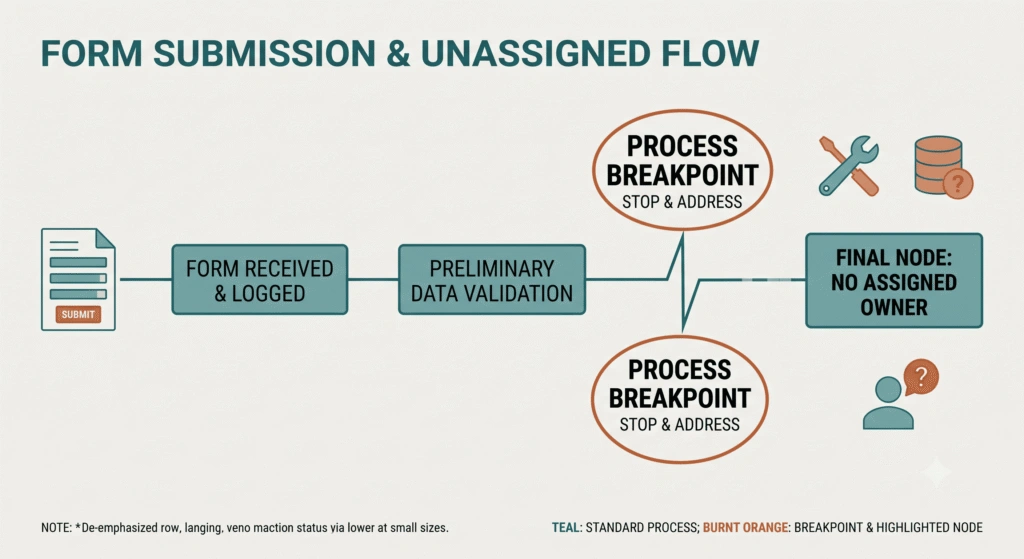
Four failure patterns show up repeatedly, and they are structural rather than creative:
- No owner. The lead arrives and no named person is responsible for it.
- No response window. Follow-up happens whenever someone remembers, which in practice means days.
- No routing rule. Every lead gets treated identically regardless of what they told you.
- No single record. The contact exists in three places, so none of them is trusted.
We wrote about this failure mode in more depth in our breakdown of the marketing system stack for SMBs — the short version is that the tools aren’t the problem, the order you build them in is.
Worth naming the objection directly: plenty of businesses have tried a lead magnet and concluded it doesn’t work for them. In most cases the magnet worked. Capture happened. What followed capture didn’t exist.
Which B2B lead magnets fit a considered sale?
Format choice should follow deal value and cycle length, not novelty. A magnet that suits a $500 impulse purchase actively wastes money on a $40,000 engagement, because the two buyers need different things before they’ll speak to you.
| Format | Build effort | Fits deal value | Fits cycle length | What it qualifies |
|---|---|---|---|---|
| Diagnostic or audit | High | $5,000+ | 60–120 days | Real intent, plus discovery material |
| Calculator or ROI tool | Medium–high | $2,000+ | 30–90 days | Budget awareness |
| Original benchmark data | High | Any | 60+ days | Research stage, and earns citations |
| Annotated teardown | Medium | $2,000+ | 30–90 days | Problem awareness |
| Template or checklist | Low | Under $1,000 | Under 30 days | Very little |
| Ebook or guide | Medium | Weak above $5,000 | — | Almost nothing |
The ebook deserves the demotion. Producing one costs real time, and the buyer signal it returns is indistinguishable from idle curiosity — a competitor, a student and a genuine prospect all download the same PDF and look identical afterwards.
Notice what the top three have in common. Each requires the prospect to hand over something specific about their own situation before it works: a URL, a set of numbers, their current spend. That requirement is the mechanism, not a side effect.
How do you match a lead magnet to your sales cycle?
Longer cycles need magnets that qualify harder. A short cycle can afford a low-friction offer because the cost of a wrong lead is one quick call; a 90-day cycle with three stakeholders cannot, because a wrong lead consumes hours of senior time before revealing itself.
What should a lead magnet ask for that a browser won’t give?
Apply one test: does completing this require the prospect to reveal something only a real buyer would reveal? Effort asymmetry is the signal. If filling it in costs them nothing, it tells you nothing.
Our own free audit works this way, and stating plainly why is more useful than pretending it’s generosity. Running it requires access to a prospect’s Search Console and ad accounts. Handing over account access is a decision a curious browser will not make and a business with a real problem makes without hesitating. The access request is the qualifier, before anybody reads a word of the output.
That principle transfers to any format. A calculator that needs last quarter’s actual spend qualifies. A calculator that runs on three dropdown guesses doesn’t. A diagnostic that asks for a live URL qualifies. A quiz with five multiple-choice questions doesn’t.
Second objection worth answering here, because it stops most teams: building a diagnostic sounds like a project nobody has time for. In practice, you almost certainly already deliver one — informally, on sales calls, from memory. The first version is that same walkthrough written down as a repeatable set of questions and a scored output. No new capability required.
What has to exist behind the form before you build the magnet?
Four things, and none of them are the magnet. Skipping them is why the last one underperformed, and building a better asset on the same foundation reproduces the same result with more effort.
A named owner. One person accountable for every lead the magnet produces, by name, not by department.
A response window. A number you have committed to — twenty-four hours, one business day, whatever is honest for your team — rather than an intention.
A routing rule. Something that distinguishes a prospect who submitted a live URL and a real budget from one who submitted a personal address and nothing else, and treats them differently.
One place the record lives. A single system of record — HubSpot, Pipedrive, or whichever CRM you already pay for — that your email platform and your ad accounts both defer to.
Worth being explicit about ownership here, because it’s the part most agency relationships get wrong. When we build capture and nurture infrastructure inside a Partnership, the list, the sequences and the automations are the client’s — during the engagement and after it ends. An email list is one of the few marketing assets a business genuinely owns rather than rents, and the arrangement that produced it shouldn’t compromise that. Our marketing ownership framework sets out where that line sits.
Not sure whether your bottleneck is capture or routing? A free audit will tell you which, before you commit to building anything.
When is a lead magnet the wrong move?
When nobody knows you exist yet. A lead magnet converts existing attention; it does not create it. Adding one to a site with two hundred monthly visitors will produce three downloads and a false conclusion about the format.
Two other situations where the honest answer is to spend the effort elsewhere. If your sales cycle is genuinely short and transactional, a published price and a Calendly link outperform any gated asset. And if inbound already generates more qualified conversations than you can service, capturing more of them is not the constraint — capacity is.
We would rather say that plainly than sell a system into a business that needs traffic. If the diagnosis is a demand problem, the work is demand, and a magnet built now sits unused for six months.
How do you know whether your B2B lead magnet is working?
The metric is qualified conversations, not opt-ins. Opt-in rate measures whether your offer is appealing. Qualified-conversation rate measures whether it selects buyers, and those two numbers move independently — the most-downloaded asset in a library is frequently the one producing the least pipeline.
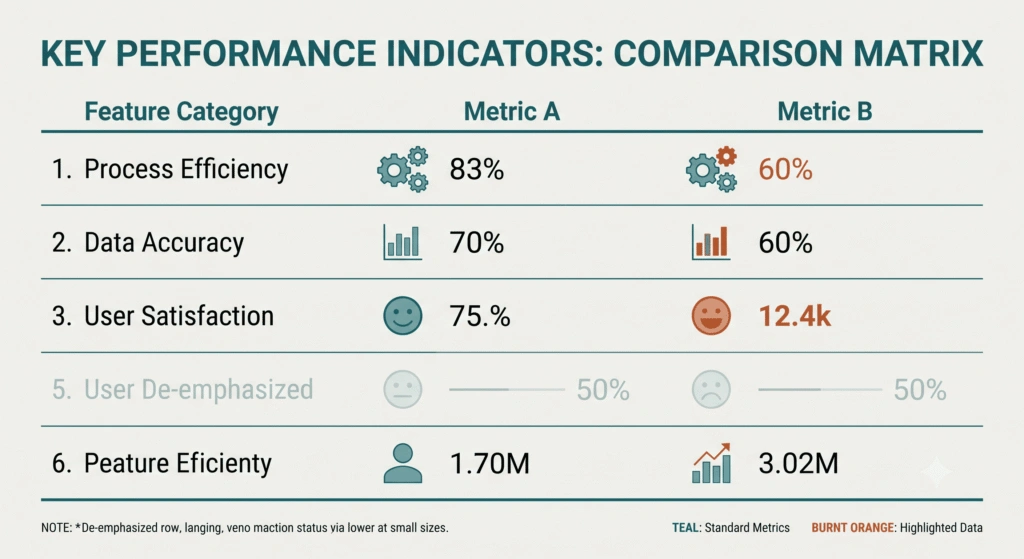
Track four figures per magnet: downloads, leads routed to a named owner within the response window, conversations booked, and opportunities created. The ratio that matters is the last over the first.
Be sceptical of published opt-in benchmarks. Almost all of them come from the vendors selling capture tools — Mailchimp, ActiveCampaign, OptinMonster, MailerLite — and they aggregate across ecommerce discount popups and enterprise whitepapers as though those were comparable events. A 3% opt-in rate on a $40,000 engagement is a good quarter. The same number on a $19 product is a broken funnel.
Judge your magnet against your own previous quarter. Nothing else is a fair comparison.
Building a better lead magnet is rarely the highest-return thing you can do this quarter. Defining who owns the leads you already capture usually is — and that work costs nothing but a decision.
If downloads have been arriving and conversations haven’t, the gap is diagnosable. Book a free audit and we’ll show you where it breaks.

Author
Carlos Rios
Carlos Rios is the Founder of Tabula. Before starting the agency, he spent his career inside companies — reporting to leaders who had no patience for vanity metrics and wanted straight answers about what was working and why. He built Tabula around that same standard: a marketing system the client owns, powered by AI and led by experts who explain the plan in plain language. Carlos studied philosophy for six years at York University and holds a Master's in Marketing from the Schulich School of Business.