GEO vs SEO: What Changes and What Small Businesses Should Do

Your marketing consultant says you need GEO now. Your web developer says GEO is just SEO wearing a new hat. Both sound certain. Meanwhile you have one person handling marketing, maybe four hours a week, and no budget for a second discipline.
Here is what almost nobody on this topic says out loud: the evidence is genuinely contested. Published studies put the overlap between AI Overview citations and top ten organic rankings anywhere from 17% to 94%, depending on who ran the analysis and when. Google’s own position, published on 15 May 2026, is that optimising for generative AI search is still SEO.
So this is not a guide to a new discipline. It separates the three things that actually changed from the things that only got renamed, then gives you a way to decide where a small budget goes when the experts disagree with each other.
GEO vs SEO is not a choice between two disciplines. Google confirmed in May 2026 that generative AI visibility runs on the same ranking systems as organic search. What genuinely changed is measurement, query length, and which pages get cited. For a small business, the practical answer is one content programme, two scoreboards, and no separate GEO budget.
What is GEO, and what is SEO?
Search engine optimisation earns ranked positions in a list of results. Generative engine optimisation, or GEO, aims to get your business cited, mentioned, or described accurately inside an AI generated answer. Same website, same crawlers, different surface. AEO, answer engine optimisation, describes the same work under a different acronym.
There is a terminology trap worth knowing before you brief anyone. In US keyword data pulled in July 2026, “geo vs seo” carries roughly 2,900 searches a month. So does “geo seo”. But “geo targeting seo” and “geo targeted seo”, at roughly 260 and 210 searches a month, are geographic targeting queries. Serving different content to Manchester and Bristol. Nothing to do with AI.
Two unrelated disciplines now share one abbreviation, and the search results for the shorter term mix both. Before you sign a proposal, ask which GEO it means. If the answer is vague, that tells you something.
What actually changed when AI started answering the query?
Three things changed materially: how long queries are, how much a top ten ranking predicts a citation, and what a click is worth. Most of what else gets sold as GEO is existing SEO work with a new label.

Queries got longer, and that changes keyword research
People type paragraphs now. Someone who used to search “crm small business” is increasingly likely to type something closer to: we are a twelve person plumbing company running on spreadsheets and I need a CRM my two office staff can actually learn in a week.
That is not a keyword. It is a situation, with constraints attached. Your existing pages can serve it, but only if they engage the constraints rather than the topic. A page called “Best CRMs for Small Business” that lists features will lose to a page that addresses what happens when the two people who have to use it are not technical.
A top ten ranking no longer reliably predicts an AI citation
This is where the industry gets uncomfortable, so here are the actual figures.
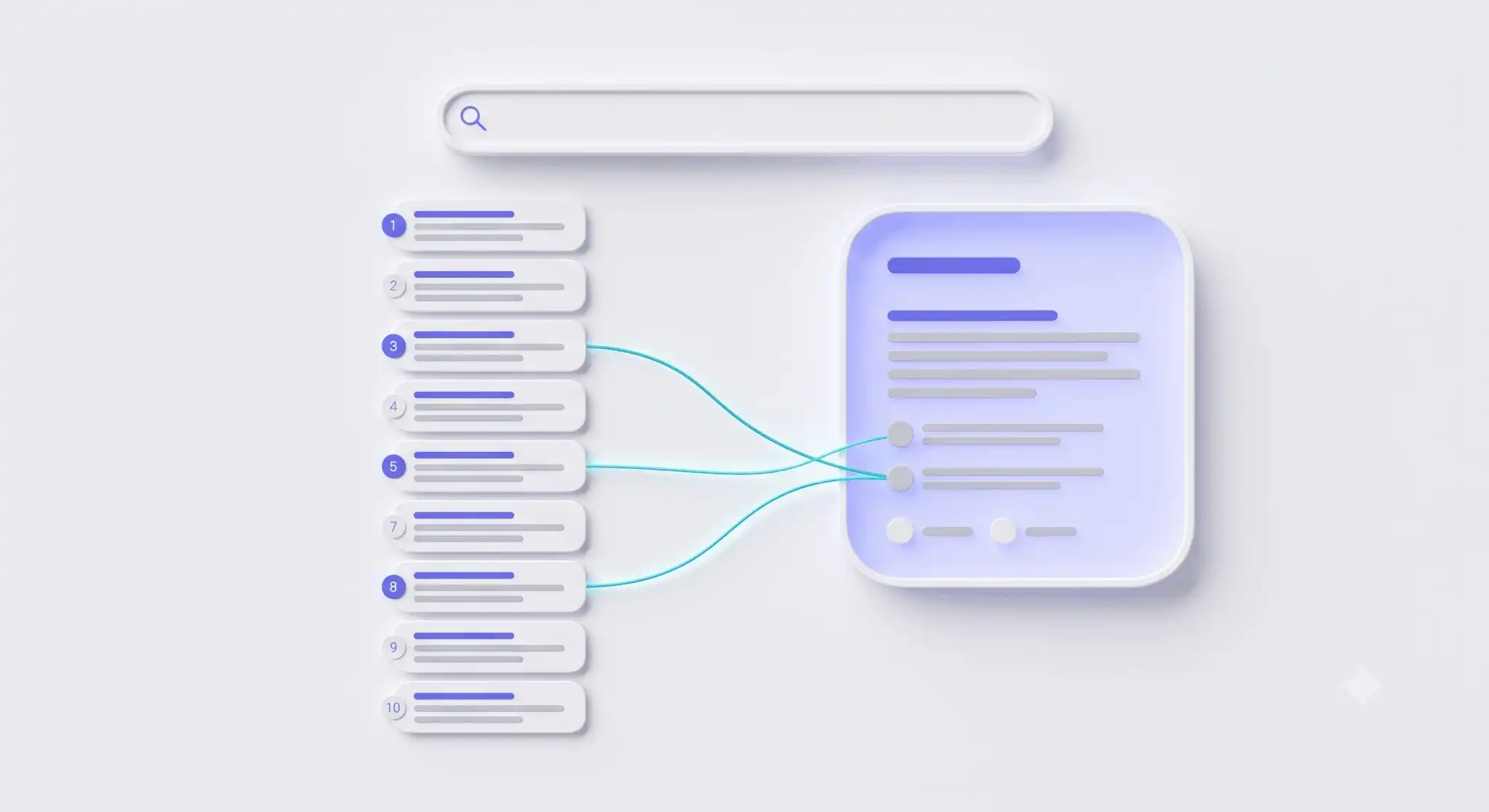
In July 2025, Ahrefs analysed 1.9 million AI Overview citations and found that 76% of cited pages ranked in the top ten organic results for the same query. By February 2026, BrightEdge put top ten overlap at roughly 17%. A cross methodology review published in March 2026 put it at 38%. Separately, BrightEdge’s sixteen month study found overall overlap with organic rankings climbing from 32.3% to 54.5%, while an seoClarity analysis of 362,000 keywords found that 94% of AI Overviews cite at least one URL from the top twenty.
Those numbers do not reconcile. Be suspicious of anyone who quotes one of them as settled. What they agree on is direction: a page one ranking is a real advantage and a weakening guarantee.
Google’s query fan out process splits a single prompt into multiple sub queries and pulls sources for each, so a page can win the headline keyword and lose every sub question around it. Google’s move to Gemini 3 as the global default for AI Overviews on 27 January 2026 is a plausible contributor to how fast this shifted.
The practical read for a small business: rankings still matter, and covering a topic properly across its related questions now matters at least as much as holding one position.
We covered how to diagnose that pattern in why website traffic is dropping in 2026, which walks through separating an AI Overview effect from a genuine ranking loss.
What stays the same?
Almost all of the technical and editorial foundation. Google’s May 2026 guidance states that generative AI features in Search are rooted in the same core ranking and quality systems as organic results. There is no separate AI index to optimise for.
The guide, published on 15 May 2026 in Search Central, is unusually direct about what you can ignore. You do not need an llms.txt file. You do not need AI specific structured data.
You do not need to chunk your content into machine sized fragments, or rewrite existing pages for AI systems. And you should not chase inauthentic mentions, which Google’s spam systems treat as spam. Google shipped a further spam update in June 2026 on exactly that basis.
What the guide says does matter is unglamorous and familiar: a unique point of view, content built on genuine experience rather than a summary of other summaries, clean technical structure, crawlable pages, sensible internal links with descriptive anchor text, and a page that loads and reads well.
If you already run a competent SEO programme, most of your GEO work is already done. If you do not, GEO is not a shortcut around it. Start with the foundation and run a DIY SEO audit on your own site before you buy anything with an acronym in the name.
One check here is genuinely new. Confirm your robots.txt permits the AI crawlers you actually want reading you: Google-Extended, GPTBot, PerplexityBot and ClaudeBot among them.
A page no AI agent can fetch cannot be cited by one. This is a real prerequisite, not a GEO gimmick, and it takes a developer about ten minutes.
Why “just do both” is bad advice for a small marketing team
Doing both is correct in principle and useless as a plan. Almost every guide on this topic ends there. A business with one marketer and a few hours a week needs to know what gets cut, not that both things matter.
Here is the arithmetic nobody writes down. If your site has fewer than roughly fifty pages and limited link authority, you are not going to win citations on broad commercial terms against publishers with thousands of pages and years of topical coverage. Their advantage compounds and yours does not, yet.
What you can win is a narrow band of specific, high intent questions where your actual operating experience is the differentiator, and where the volume is small enough that nobody large has bothered to cover it properly.
The real trade is not GEO against SEO. It is breadth against depth, and depth is the only side of that trade you can afford.
Practically, that means fewer pages, each answering one question completely, including the complications and the numbers that a competitor writing from a keyword tool cannot invent. Our breakdown of AI SEO techniques that work covers the execution side of that in more detail.
The Same-Work Test: is this GEO tactic new work, or SEO relabelled?
The Same-Work Test is a four question filter you can run on any GEO tactic or agency proposal in about two minutes. It exists to answer one question: am I about to pay separately for work I am already paying for?

- Would this still be worth doing if AI Overviews disappeared tomorrow? If yes, it is SEO, and it belongs in the SEO budget, not a new line item.
- Does it require a file, schema type, or markup format that only AI systems read? If yes, check it against Google’s May 2026 mythbusting list before paying for it.
- Does it change what a reader actually gets on the page? If not, it is formatting, not substance.
- Can you tell whether it worked using data you already have access to? If not, you are buying something you cannot audit.
Applied honestly, the test collapses most GEO proposals into something more useful. Structuring a section so it answers its question without needing the paragraph above it passes questions three and four, and fails question one, which tells you it is good SEO you should have been doing anyway. Paying for an llms.txt implementation fails one, two and three. Building a library of the actual multi sentence prompts your buyers type, then checking whether your pages answer them, passes all four. That is the rare tactic that is genuinely new work.
Failing question one is not a reason to skip a tactic. It is a reason to stop treating it as a separate service with a separate invoice.
How do you measure GEO and SEO now that Search Console reports both?
Since 3 June 2026, Search Console has included a dedicated generative AI performance report showing impressions from AI Overviews and AI Mode. For the first time, AI visibility is a separate line item in a tool you already own. It also has real limits.
Google announced the reports on 3 June 2026 and expanded access on 23 June. They show impressions broken down by page, country and device. They do not show clicks, click through rate, or query data. History starts around 18 May 2026 rather than reaching back years. Google confirmed these impressions were always counted inside your overall performance totals, so your headline numbers have not changed, only the view.
That limitation matters for what you can honestly expect. You can now answer: are we appearing in AI answers, and on which pages. You cannot yet answer: what did that appearance earn us. If someone is selling GEO on the promise of revenue attribution from Google data, they are selling something Google does not currently provide.
Google also shipped a control under Settings that keeps your content out of AI Overviews, AI Mode and Discover AI, honoured from 17 June 2026, and confirmed that opting out does not affect standard rankings. For most small businesses this is the wrong lever to pull. But it is now a decision you own rather than a default you cannot see.
Set two scoreboards on one sheet
Before you change anything, write down where you are. Scoreboard one is the familiar set: impressions, clicks, click through rate and average position from the standard performance report, plus enquiries received. Scoreboard two is AI impressions by page from the generative AI report, plus a monthly manual check.
The manual check is the part people skip and it is the only citation data that will ever be specific to your business. Pick ten prompts your buyers would realistically type, the long conversational kind. Run them in the tools your customers actually use. Record three things for each: were you mentioned, were you cited with a link, and was what the model said about you accurate. Ten prompts, once a month, is roughly a thirty minute job.
Accuracy is the column most people forget, and it is often where the immediate value sits. A model describing your services wrongly is a fixable problem on your own website, and fixing it usually means making a page clearer rather than buying anything.
What should a small business actually do first?
In priority order: fix crawl and AI crawler access, choose five buyer prompts, deepen the pages that already almost rank, set both scoreboards, then reassess after ninety days. No new budget line and no separate GEO retainer.
Start with access, because nothing else counts if the page cannot be fetched. Check robots.txt for the AI crawlers, confirm your key pages are indexed, and make sure your business information is consistent everywhere it appears.
Then pick five prompts, not fifty keywords. Write out, in full sentences, the five questions a good prospect asks in the week before they buy from you. These are usually the awkward ones: what this costs, what goes wrong, whether it works for a business their size, what happens if they want to leave.
Next, deepen rather than expand. Look for pages sitting between positions eleven and thirty. They already have relevance, they are just thin. Adding what actually goes wrong, a real timeframe, and a specific number will do more than a new post will. Our guide to AI SEO techniques to boost traffic covers how to prioritise which pages get the attention.
Then set the two scoreboards and leave them alone for ninety days. AI citation patterns are noisy week to week and you will talk yourself out of a working strategy if you check on Tuesdays.
If you would rather not run this yourself, our professional SEO services cover the technical access work and the page level depth work as one programme, because that is how it should be scoped.
What should you ask before hiring a GEO agency?
Four questions separate a GEO proposal with substance from a rename. Ask which GEO they mean, which tactics survive the Same-Work Test, what data they will report, and what they intend to stop doing.
On terminology: given that geographic targeting and generative engine optimisation now share an abbreviation, a proposal that never clarifies which one it is selling has not been written for you specifically.
On data: a good answer references the Search Console generative AI report and its limits, and includes a manual prompt check. A weak answer promises AI revenue attribution, which nothing currently available from Google supports.
On subtraction: this is the question that reveals the most. An agency adding GEO without removing anything is describing a price increase. If a new discipline genuinely matters, something in the existing plan mattered less than they thought.
If you are weighing that decision now, talk to us before you commit to a retainer. We would rather tell you your current programme is fine than sell you a second one.
That is also why we build systems clients can eventually run themselves.
Common questions about GEO vs SEO
Can GEO replace traditional SEO?
No. Google’s May 2026 guidance confirms generative AI features run on the same core ranking and quality systems as organic search. A page that cannot be crawled or indexed cannot be cited in an AI answer either. GEO depends on SEO foundations rather than replacing them.
Do I need GEO if I already have SEO?
Mostly you already have it. If your pages are crawlable, answer specific questions completely, and contain real first hand detail, you are doing the substantive part. What is usually missing is measurement: checking whether AI tools describe your business accurately, and acting when they do not.
Which is more important, SEO or GEO, for a small business?
SEO, if you are forced to choose, because it is the dependency. But the more useful question is breadth against depth. With a small team, fewer and deeper pages on the questions your buyers actually ask will outperform broad coverage on either surface.
What tools help with GEO and SEO integration?
Start with what you own. Search Console now reports AI Overview and AI Mode impressions separately, and its standard report still covers rankings and clicks. Add a manual monthly check of ten buyer prompts in the AI tools your customers use. Paid citation trackers are worth considering once that habit exists, not before.
How much overlap is there between SEO and GEO?
More in the work than in the measurement. The technical and editorial foundations are shared almost entirely. Citation outcomes are where they diverge, and published overlap figures between AI citations and top ten rankings range from 17% to 94% depending on methodology, so treat any single number with caution.
The GEO versus SEO framing sells services. It does not describe your problem. Your problem is that a shrinking share of the people who need what you sell will ever see a list of ten blue links, and you have one marketer and limited hours to respond to that.
The response is not a second discipline. It is fewer and deeper pages that answer the questions your buyers actually type, technical access for the crawlers that read them, and two scoreboards so you can tell visibility apart from revenue. Run the Same-Work Test on the next GEO proposal that lands in your inbox. Most of it will turn out to be work you already owed your own website.
The businesses that come out of this decade well will not be the ones that bought the acronym earliest. They will be the ones whose content was worth citing.

Author
Carlos Rios
Carlos Rios is the Founder of Tabula. Before starting the agency, he spent his career inside companies — reporting to leaders who had no patience for vanity metrics and wanted straight answers about what was working and why. He built Tabula around that same standard: a marketing system the client owns, powered by AI and led by experts who explain the plan in plain language. Carlos studied philosophy for six years at York University and holds a Master's in Marketing from the Schulich School of Business.