

What the 2026 FIFA World Cup Teaches SMBs About Real-Time Marketing?

When the stadium lights failed during Super Bowl XLVII in 2013, Oreo posted one image with five words: you can still dunk in the dark. It earned thousands of retweets inside an hour and later picked up a Cannes Lion, and it cost nothing to produce in the moment. That single post became the reference point every marketer reaches for when they talk about real-time marketing.
What gets left out of the story is what happened next. Thousands of brands watched that tweet and decided they could win attention the same way. Most could not. Within a year, the trade press was openly mocking the copycats, and the agency world had a running joke about brands forcing themselves into moments nobody asked them to join (a pattern the industry documented in detail). The lesson buried in there is the one that actually matters for a small business with no media budget.
Right now you have the perfect live laboratory to watch it play out. The 2026 FIFA World Cup is on across the United States, Canada and Mexico from 11 June to 19 July: 48 teams, 104 matches, 16 host cities, 39 straight days of guaranteed attention. By the end of this article you will know the five things the tournament teaches about real-time marketing, why your size is an advantage rather than a handicap, and the simple system that separates the brands that win moments from the ones that embarrass themselves.
Real-time marketing means reacting to a live cultural moment, like a World Cup goal, fast enough that your audience is still paying attention. For a small business it works without a media budget when three things are ready in advance: a defined brand voice, a bank of pre-approved content templates, and one person empowered to publish in minutes. Speed without a system is just noise.
What is real-time marketing, and why does it favour small businesses?
Real-time marketing is the practice of creating and publishing content in direct response to a live event or trending moment, while public attention is still focused on it. The window is short. A goal, a result, a viral clip, or a refereeing decision holds collective attention for minutes or hours, not days. The goal is relevance: showing up in a conversation people are already having, rather than starting one from scratch.
Here is the part big-brand case studies obscure. The thing that makes real-time marketing hard at scale is approval. A national brand needs legal sign-off, brand-team review and agency coordination before anything goes live, and by the time that finishes, the moment has passed. A small business has none of that drag. The owner can see a moment and approve a post in the same breath. Speed is the whole game, and you already have the structural advantage. The catch is that most small teams have never set up the groundwork that lets them move on it, which is usually why their social content lands flat.
5 real-time marketing lessons from the 2026 FIFA World Cup
A month-long tournament across three countries is the clearest live demonstration of moment marketing you will get this year. Five lessons translate directly to a small business.
1. Ride the moment; you do not have to sponsor it
Official sponsorship costs millions. Relevance costs a point of view. The tournament generates a steady stream of shared reference points (a shock result, a standout player, a host-city story) that any business can react to without paying FIFA a cent. The brands that win are not the ones with the biggest logo on the perimeter board. They are the ones in the replies, in the local feed, reacting while the moment is hot. Your job is to find the angle that connects a match moment to something your customers actually buy from you.
2. Local relevance beats global noise
Eleven of the 16 host cities are in the United States, and even outside them, the tournament collapses into a local experience: the bar showing the match, the neighbourhood watch party, the office sweepstake. A small business cannot out-shout a global advertiser, but it owns the local angle completely. A cafe posting about the crowd it expects for a specific fixture, a salon running a result-day offer, a shop tying a window display to its city’s matches: that is relevance a national brand cannot manufacture. If foot traffic matters to you, this is also the moment to make sure you optimise your Google Business Profile, because the searches that follow a local moment are overwhelmingly “near me”.
3. Speed needs a system, not luck
Oreo’s blackout post looks like a flash of luck. It was not. The team was running from a command centre, had a defined voice, and had spent years training to move fast, including holding an early social media world record for reaction speed (the agency that built it has said as much). The copycats failed because they tried to buy the outcome (the viral post) without building the thing underneath it (the system).

This is the lesson that matters most for an SMB, and it is the one we keep coming back to with clients: the brands that win moments have pre-decided their voice, their templates and their approval path before the moment arrives. Improvising all three live is how you end up posting nothing, or posting something you regret.
4. Do not bet the moment on one channel
The World Cup conversation is not happening in one place. It is on TikTok and Instagram, on X, in local search, in WhatsApp groups and in email inboxes. A reaction that lives on a single platform reaches a fraction of the people paying attention. This is exactly why a multi-channel marketing strategy matters more during a live moment than at any other time: the same core reaction, adapted to each channel’s format, multiplies reach at no extra production cost. Small businesses ask how to use multi-channel marketing effectively all the time, and a tentpole event is the easiest place to start because the subject matter is handed to you.
5. Relevance has a half-life, and forced relevance backfires
A reaction to a match result is worth posting in the first few hours and worthless by the next morning. But the more important limit is judgement. The brands that damaged themselves after Oreo were the ones that jacked moments they had no business touching, including tragedies and tense cultural events. The same rule applies to the World Cup: react to the football and the fan energy, not to a controversy you do not understand. Knowing when not to post is part of the system, not a failure of it.
How can a small business actually run real-time marketing without a big team?
You do not need a command centre. You need a readiness kit you can build in an afternoon, so that when a moment lands you are reacting, not starting from zero. Three components do almost all the work.
- A one-page voice guide. Three or four rules for how your brand sounds when it reacts: how casual, what it will and will not joke about, which words and emojis are on-brand. This is what lets a junior team member post in your voice without waiting for the owner.
- A template bank. Three or four pre-built post formats sitting ready: a result-reaction layout, a question-to-the-audience format, a simple offer-tied-to-an-outcome template. Mehul can design these once so the only thing that changes in the moment is the copy and the score.
- A fast approval path. Decide now who can hit publish without a second sign-off. For most small businesses that is the owner or one trusted person. Removing the approval bottleneck is the single biggest speed gain available to you.
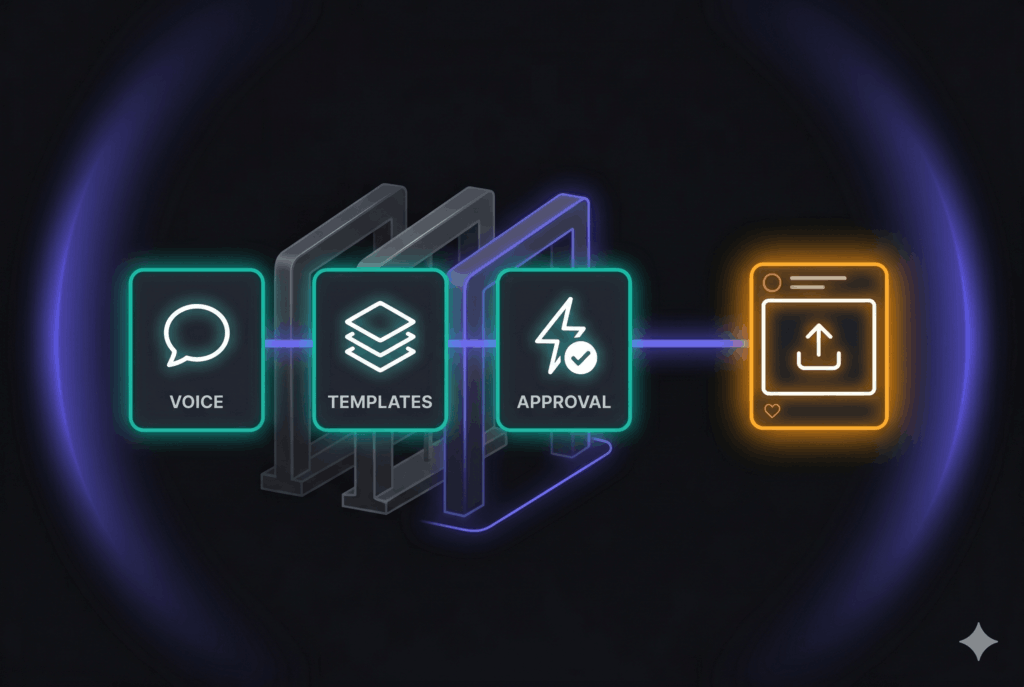
With those three in place, a reaction takes minutes, not a meeting. The objection we hear most is “we don’t have the time.” The honest answer is that real-time marketing done badly does cost time you do not have, because it produces yet more posts that sink without trace. Done with a kit, it is faster than your normal content, because the moment supplies the idea. The second objection, “we’ll look like we’re trying too hard,” is solved by lesson five: react only where you have a genuine angle, and skip the rest. If your reactions still go nowhere, the problem is usually distribution and relevance rather than effort, which is the same root cause behind most small business content that gets no traffic.
Real-time marketing for small business: Quick Answers
Is real-time marketing only for big brands with huge budgets?
No. The expensive part of the famous examples was never the post itself, which usually cost nothing. The cost was the standing team and approval machinery. A small business gets the speed for free and only needs a lightweight readiness kit: a voice guide, a few templates, and one person who can publish without waiting.
How fast do you actually have to post for a moment to land?
Fast enough that the conversation is still live, which usually means within a few hours for a result and within minutes for a fast-moving moment like a dramatic goal. After roughly a day, the audience has moved on and the same post reads as late. Preparation is what buys you that speed.
What are the biggest risks for a small business?
Two. The first is forcing relevance by jacking a moment you have no real connection to, which reads as desperate. The second is wading into something sensitive or controversial without context. The fix for both is a simple rule: only react where you have a genuine angle, and when in doubt, stay out.
Do I have to mention the World Cup directly to benefit from it?
Not always. You can tie content to the fan behaviour around it, the watch parties, the shared schedule, the local crowd, without naming the tournament or risking trademark issues. Often the smarter play for a small business is to ride the energy and the local moment rather than the event itself.
The moat is the system, not the budget
The World Cup will hand every business in your market the same moments for 39 days. The ones that turn those moments into reach will not be the ones who spent the most. They will be the ones who decided their voice, built a few templates, and cleared the path to publish before the whistle blew. That is the whole difference between real-time marketing that works and the forced, late posts that quietly damage a brand.
If you want a social presence that is ready to react when the moment comes, rather than scrambling after it, that is precisely the system we build and run for small businesses. Tell us where your marketing is today and we will show you what reacting in real time would look like for your business. The next big moment is already on the schedule. The only question is whether you will be ready for it.

Author
Carlos Rios
Carlos Rios is the Founder of Tabula. Before starting the agency, he spent his career inside companies — reporting to leaders who had no patience for vanity metrics and wanted straight answers about what was working and why. He built Tabula around that same standard: a marketing system the client owns, powered by AI and led by experts who explain the plan in plain language. Carlos studied philosophy for six years at York University and holds a Master's in Marketing from the Schulich School of Business.