
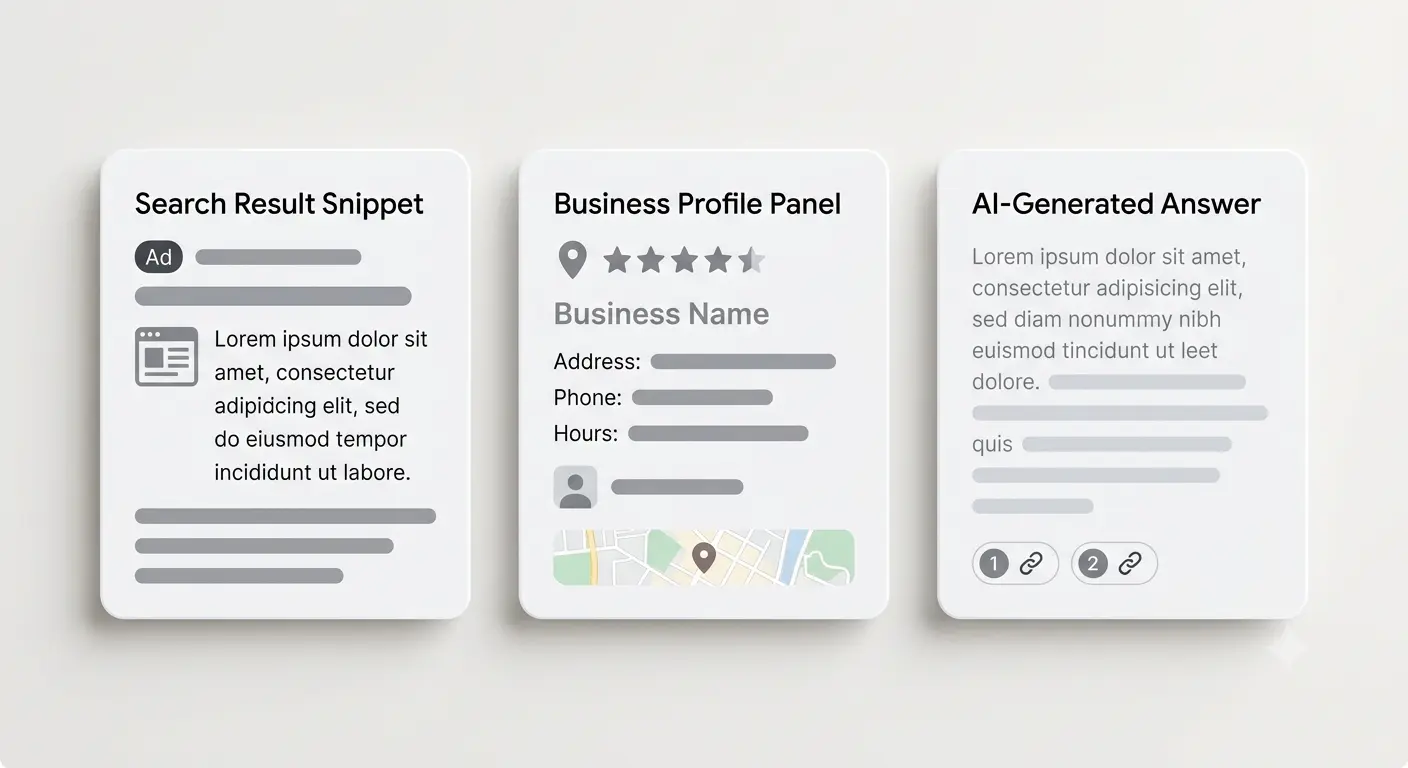
Where to Spend Your Marketing Budget: Ads, GBP, or AI Search First

Most small businesses split their marketing budget evenly across Google Ads, their Google Business Profile, and whatever “AI search optimization” means this quarter.
That instinct is wrong, and the stakes just went up: Ahrefs found that AI Overviews now cut clickthrough to the top-ranking Google result by 58 percent, more than double what the same study measured a year earlier. The three channels are not equal bets, and they do not pay off in the same order. Here is the sequence that actually works, and what we did with our own budget when we had to make this exact call.
Fix your Google Business Profile first, it’s cheap and now doubles as an AI search surface. Build SEO foundation second, since it’s what AI citations are grounded in. Add Google Ads once your funnel can prove conversion. Treat direct AI search advertising as a 2027 line item, not a 2026 one.
What changed: your GBP is now an AI search surface, not just a maps listing
Google retired Q&A on Business Profiles in late 2025 and replaced it with the Ask Maps AI layer, live in Canada as of August 2026. That’s not a cosmetic update. It means your GBP content, reviews, and categories now feed an AI-generated answer layer directly, the same mechanism driving AI Overviews in regular search. Most GBP advice online still treats it as a maps listing. It’s closer to a mini AI Overview with your business name attached.
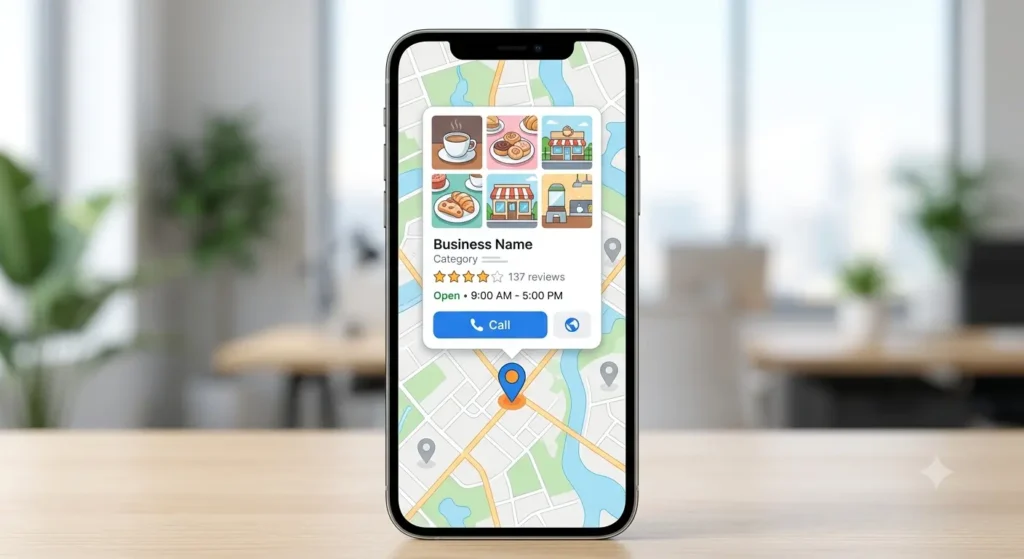
This matters for budget order because GBP is close to free to fix and the return just went up. If your profile is thin, incomplete, or has stale categories, you’re invisible in a channel that costs nothing but time. We cover exactly what to fix in fixing your Google Business Profile.
The strongest predictor of AI citation isn’t a GEO trick, it’s traditional SEO ranking. AI engines ground their answers in content that already ranks well on Google. Skipping straight to “AI search optimization” without the underlying SEO work is building the second floor with no first floor under it.
Build SEO foundation before you pay for traffic
This is also where most agencies get the order backward. Paid traffic and AI search visibility work are advertised as the exciting line items. SEO foundation, Organization schema, E-E-A-T signals, a site structure a crawler can actually parse, is the unglamorous part. It’s also the part everything else depends on.
This exact call, which channel first and in what order, is the kind of decision that’s supposed to get made once, properly, not re-guessed every quarter. It’s literally the channel strategy layer inside The Tabula, our marketing operating system deliverable, not something we think businesses should have to figure out alone.
So where should your marketing budget go first?
A well-known counterargument says start with Google Ads, not GBP or SEO: faster feedback, faster revenue, layer in SEO once ads show you what converts. That’s good advice for a brand that already has traffic, a working funnel, and budget to spend on learning. It’s the wrong order for a small business testing a small budget for the first time, because every dollar spent learning is a dollar not spent finding out whether the offer and positioning even hold up. GBP and SEO foundation cost time, not spend. They surface problems with your offer before you pay to discover them the hard way. Once that foundation is solid, Google Ads gets you faster, cleaner data, because the tracking and targeting underneath it already works.
We get the pushback: foundation work doesn’t pay the bills this month. Fair. The GBP fix is days, not months, and it’s free. SEO foundation is slower, but it’s the only line item here that keeps paying after you stop funding it. Paid stops the day you stop paying for it.
Not sure which order fits your business?
Talk to us about your channel plan. We’ll tell you the order that fits your budget, not a generic ranking.
Where Google Ads still earns its keep
Google Ads isn’t being replaced, it’s being repositioned. Seer Interactive’s ongoing CTR study shows organic CTR falling to under 1% on queries where an AI Overview appears. That doesn’t kill paid search. It changes what paid search is for: it’s the channel you turn on once you can measure what a click is actually worth, because organic is no longer a reliable volume play on its own.

The mistake is turning Google Ads on before tracking works. If you can’t tell which dollar produced which sale, adding paid spend just produces faster, more expensive noise. If you haven’t audited your account in a while, start with setting up Google Ads correctly before adding budget, not after.
When AI search advertising becomes worth a line item
Direct advertising inside AI platforms is still early. Google has started integrating ads into AI Overviews and AI Mode. OpenAI has signaled ChatGPT advertising is coming.
Perplexity has gone the other way and dropped ads entirely to protect user trust. Budget allocation toward AI search optimization work reached 12 to 30% among marketers in 2025, with most planning to increase it further in 2026, but that’s spent on visibility work, structure, entity clarity, citation building, not ad placements inside AI answers themselves.
For most small businesses, direct AI search ad spend isn’t a 2026 decision. It’s something to watch, not fund yet.
What we did with our own budget
We’re not going to tell you to be patient with paid spend without admitting we weren’t, either. In January 2026 we ran Google Ads for Tabula at around $50 a day. It worked. It produced a major partner relationship and a client. We turned it off anyway, not because it underperformed, but because we didn’t have the delivery capacity to take on what it was generating. That’s the honest version of “where should my next dollar go”: sometimes the answer isn’t which channel, it’s whether your business can absorb what that channel produces before you turn it on.
FAQ
What should I fix first: ads, SEO, or AI search?
Start with your Google Business Profile. It’s free to improve and now feeds AI-generated answers directly through Google’s Ask Maps layer. SEO foundation comes next, since it’s what AI citations are grounded in. Paid ads come once you can measure what a conversion is actually worth.
Is SEO still worth it with AI Overviews taking traffic?
Yes. AI engines ground their answers in content that already ranks well organically. Traditional SEO ranking is the strongest known predictor of AI citation, so skipping it to chase “AI optimization” directly removes the foundation that visibility depends on.
How much of my marketing budget should go to AI search optimization?
Marketers allocated 12 to 30% of budget to AEO and GEO work in 2025, with further increases planned for 2026. That’s spent on entity clarity, structure, and citation building, not direct ad placements inside AI answers, which remain an early and largely unproven channel for small business budgets.
Should I pause Google Ads to focus on SEO?
Not necessarily, but don’t run both without tracking that can tell them apart. If you can’t attribute a sale to a specific channel, adding paid spend on top of unclear SEO performance just produces more data you can’t use.
Does my Google Business Profile matter for AI search visibility?
More than it used to. Google retired GBP Q&A in late 2025 and replaced it with an AI answer layer called Ask Maps, live in Canada since August 2026. Profile content, categories, and reviews now feed that layer directly, making GBP an AI search channel, not just a maps listing.
Shouldn’t I start with Google Ads instead, for faster results?
Only if you already have traffic and a working funnel to layer ads onto. For a small business testing its first real marketing budget, GBP and SEO foundation cost time, not spend, and they surface problems with your offer before you pay to find them. Start there, then let Google Ads work with cleaner data underneath it.
Not sure which channel to fund next?
We’ll tell you the order that fits your business, not a generic ranking.
Talk to us about your channel plan

Author
Carlos Rios
Carlos Rios is the Founder of Tabula. Before starting the agency, he spent his career inside companies — reporting to leaders who had no patience for vanity metrics and wanted straight answers about what was working and why. He built Tabula around that same standard: a marketing system the client owns, powered by AI and led by experts who explain the plan in plain language. Carlos studied philosophy for six years at York University and holds a Master's in Marketing from the Schulich School of Business.