
PPC for Small Business: What You’ll Pay and What You Get

You tried Google Ads once. You got clicks, watched the impressions climb, then counted your actual new customers a few weeks later and switched the whole thing off. Most small business owners who’ve run paid search have some version of that story, and the lesson they take from it is that the game is rigged for companies with deeper pockets.
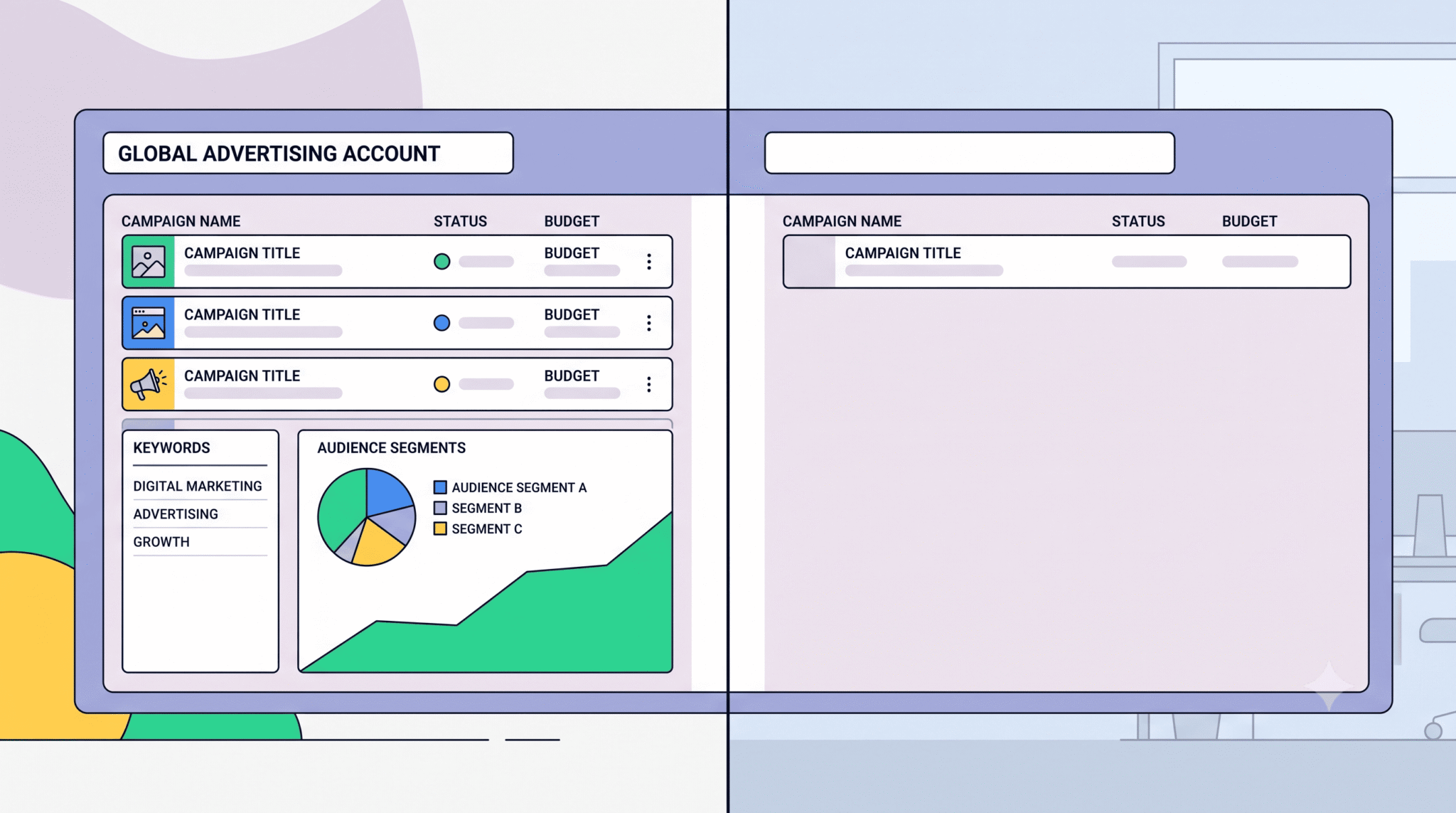
It usually isn’t. But there’s a cost most owners never see coming, and it isn’t the budget. When a paid search campaign is set up inside an agency’s account rather than yours, everything the campaign learns belongs to the agency.
The conversion history, the negative keyword lists built up over months, the audience data that makes bidding accurate. Change agencies and it’s gone. You start again from nothing, and you usually don’t find out until the day you leave.
That’s the part nobody puts in the pitch deck. Here’s what paid search actually asks of a small business, and how to decide whether to bother.
Paid search charges you per click, priced by auction, so the cost depends on how commercially valuable your keywords are rather than on any published rate. Before spending, get four things in place: working conversion tracking, one landing page for one offer, a close rate you’ve measured, and the capacity to answer enquiries fast. Then confirm the ad account is registered in your name, not your agency’s.
What are you actually buying with PPC?
PPC, or pay-per-click, means you’re charged when someone clicks your ad rather than when they see it. Google Ads and Microsoft Advertising both price each click by auction, so there’s no rate card and no fixed price for anything.
What you’re buying, in practice, is attention at a specific moment. Someone types a phrase into Google, and you pay to appear in front of them right then. That’s the appeal for a small business. Unlike organic search, which takes months to build, paid search puts you in front of buyers this week.
The trade is that the meter runs whether or not anything good happens afterwards. Google charges for the click. Whether that click becomes a customer is entirely down to your landing page, your offer and your follow-up, none of which Google is responsible for. Almost every disappointing campaign we’ve reviewed failed after the click, not before it.
Why do some clicks cost far more than others?
Because the auction prices intent, not subject matter. A click from someone ready to buy is worth more to your competitors than a click from someone reading up, so they bid more for it, and the price follows.
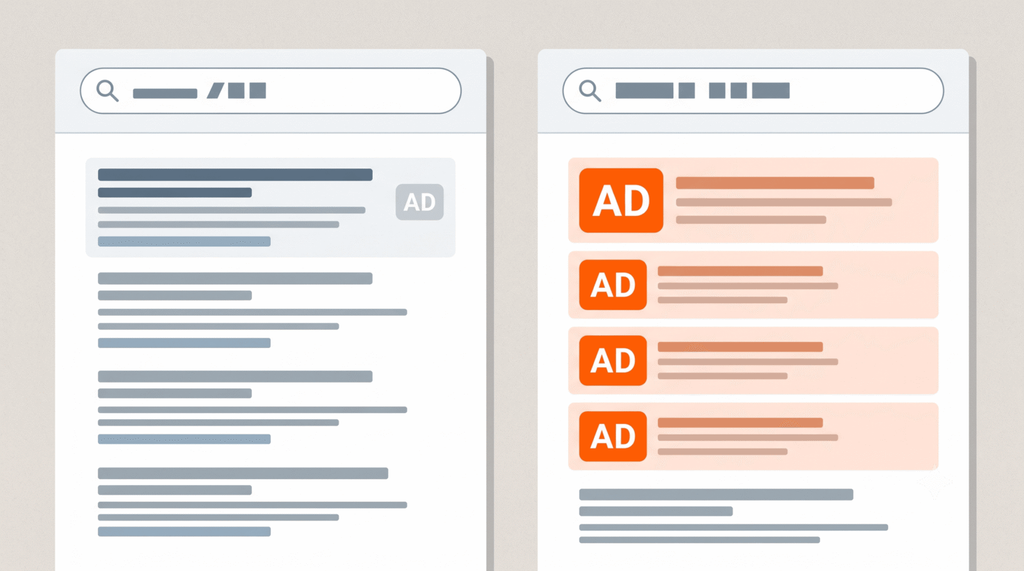
This produces two effects that pull in opposite directions, and both matter to a small budget.
Informational searches are cheap and mostly useless in paid search. Someone searching for a definition or a how-to guide is doing homework, and they’ll happily spend your budget without ever calling you. Those keywords look attractive precisely because they’re affordable. That’s the trap.
Buying-intent searches cost considerably more per click, and are usually worth it. Someone searching for a service in their city with an urgency word attached is close to a decision. You pay more for that click because it converts far better, and if your customer value supports it, that’s a trade you should want to make more often.
So the real question isn’t whether paid search is expensive. It’s whether a click that converts at a realistic rate still leaves you money once you’ve served the customer. That’s arithmetic you do with your own figures, not ours.
How do you work out whether the math works for you?
Work backwards from a customer, not forwards from a budget. Most owners start by asking what they can afford to spend per month, which tells them nothing about whether it will work.
Start with what a customer is worth to you across the whole relationship, including repeat business and referrals. Then find your close rate: of the last batch of enquiries you received, what share became paying customers?
Then estimate how many clicks it takes to produce one enquiry, which your landing page performance will tell you if you already have traffic, or which Google Keyword Planner and a conservative guess will approximate if you don’t.
Chain those together and you get a cost per customer. Compare it against what a customer is worth. If there’s comfortable room between the two, paid search can work for you. If it’s tight or inverted, it can’t, and no amount of clever campaign management will change it.
Do this before you open an account. It takes an afternoon and it’s the single most useful hour in the whole process. Our guide to setting a realistic ROAS target covers how to judge the result once you have it.
When is PPC the wrong answer for a small business?
Frequently. We sell this service and we still talk businesses out of it, because a campaign that can’t work makes the client poorer and makes us look worse.
Skip paid search, for now, if any of these describe you.
Nobody is searching for what you sell.
Paid search harvests existing demand, it doesn’t create it. If your category or product is genuinely new, there’s nothing in the auction to buy. Check volume in Keyword Planner first.
Your customer value can’t absorb your cost per customer.
Low-value, one-off purchases rarely survive paid search economics. High-value or repeat-purchase businesses usually do.
Your website doesn’t convert the traffic it already has.
If the visitors arriving through organic search aren’t enquiring, buying more visitors just proves the same point at a higher price. Fix the page first.
You can’t respond to enquiries quickly.
Paid leads go cold fast. If enquiries sit unanswered until Monday, you’re funding your competitor’s pipeline.
You need it to work immediately on a very small budget.
Campaigns need enough data to become accurate. A tiny budget with a short deadline usually buys an inconclusive month rather than a bad one, which is worse because you learn nothing.
If two or more of those apply, organic search is likely the better first investment, and paid can wait until the foundations hold.
What has to be true before you spend anything?
Four things, all cheap to sort out now and expensive to discover later.
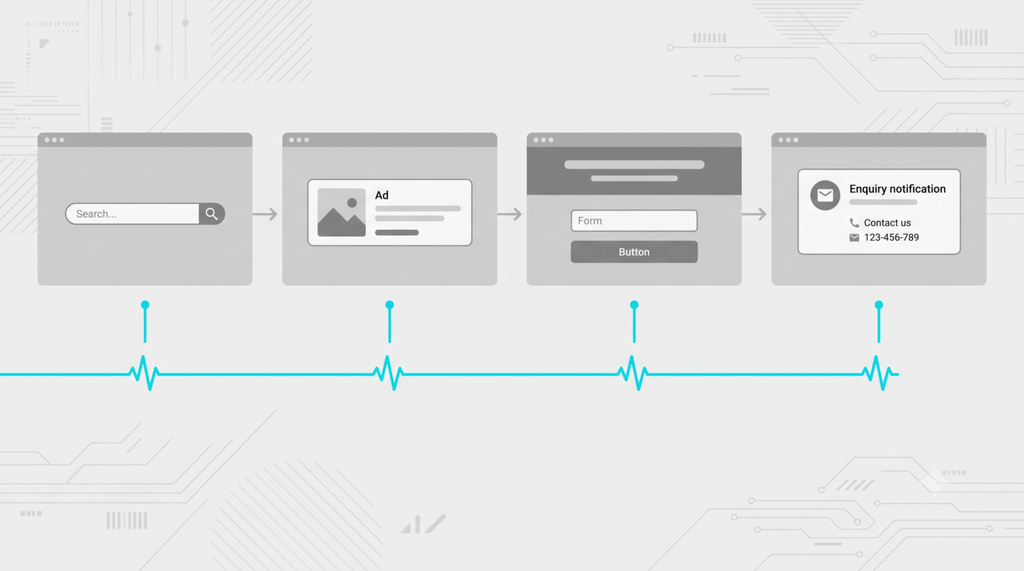
Conversion tracking that fires correctly. Form submissions, calls and bookings all recorded in Google Ads and GA4, deployed through Google Tag Manager, with call tracking through something like CallRail if the phone is your main channel. Without this, Google’s bidding is optimising toward nothing, and so are you.
One landing page built for one offer. Not your homepage. The page should echo the ad’s promise in its opening line and ask for a single action. Pointing paid traffic at a general homepage is the most common reason small business campaigns underperform.
A close rate you’ve actually measured. Even roughly, from recent enquiries. You can’t set a sensible bid without it.
Capacity to do the work. Generating enquiries you can’t service costs you reputation on top of budget.
With those in place, the build itself is straightforward. Our Google Ads setup walkthrough takes it from there.
Who should own the ad account, you or your agency?
You should, without exception. This is the question almost nobody asks during a sales call and a lot of owners regret not asking later.
Plenty of agencies run client campaigns inside their own manager account. It’s tidy for them and it sounds like a convenience for you. The consequence appears when the relationship ends: the account history stays behind. The conversion data, the negative keyword lists refined over months, the audience segments, the accumulated learning that makes automated bidding accurate. You walk away with a reporting spreadsheet and start from scratch somewhere else.
That history isn’t paperwork. Google’s automated bidding improves as it accumulates conversion data on a specific account, which is why a well-aged account outperforms a fresh one running identical campaigns. Losing it is a real setback, and it explains why switching agencies so often produces a bad stretch that gets blamed on the new agency’s competence.
Ask three questions before signing anything, including with us. Is the ad account registered under my business name, with my billing details attached? Do I hold admin access rather than view-only? If we part ways, what exactly leaves with me, and what stays with you? Any answer that leans on the phrase “our account” is the answer.
This is the reason we build marketing systems clients own outright. The system, the accounts, the data and the results belong to the business, whether Tabula stays or not. Dependency is a business model. It just isn’t ours.
What actually counts as working?
Cost per customer measured against customer value. Not clicks, not impressions, not click-through rate. Platform metrics confirm the ads are functioning. They say nothing about whether the business made money.
Track three things monthly. Cost per qualified enquiry, meaning the ones you’d genuinely want, not every form fill. The share of those enquiries that become customers. And cost per acquired customer set against what a customer is worth to you. If that last relationship is healthy, the campaign works, and everything above it is diagnostics rather than scoreboard.
Give it a full quarter before judging. The opening stretch is the account learning, the middle is correction, and only the final stretch gives an honest read. If it’s still upside down by then, the cause is usually the offer or the landing page rather than the bidding, and there’s a short list worth checking.
How should you start?
Narrow and expensive rather than broad and cheap. It feels backwards on a small budget and it’s still correct.
Begin by installing and verifying conversion tracking, building one landing page for one offer, and writing down your close rate and customer value. Then launch a single search campaign on a short list of buying-intent keywords, exact and phrase match only, tightly geo-targeted, with a negative keyword list you review a couple of times a week. Only once you can see which keywords convert should you cut the ones that don’t, raise bids on the ones that do, and consider a second campaign.
Hold off on broad match and Performance Max at the start. Both work well once an account has conversion data to learn from, and both spend a small budget efficiently when it doesn’t.
The small businesses that make paid search pay usually aren’t the ones with the biggest budgets. They’re the ones who did the arithmetic before opening the account, bought buying intent instead of curiosity, and kept their name on everything they built. That’s a system, and it outlives any single campaign.
Not sure paid search is right for your business?
Tell us what you sell and what a customer is worth to you. We’ll tell you straight, including if the answer is no.

Author
Carlos Rios
Carlos Rios is the Founder of Tabula. Before starting the agency, he spent his career inside companies — reporting to leaders who had no patience for vanity metrics and wanted straight answers about what was working and why. He built Tabula around that same standard: a marketing system the client owns, powered by AI and led by experts who explain the plan in plain language. Carlos studied philosophy for six years at York University and holds a Master's in Marketing from the Schulich School of Business.